
Heat arrives sooner. And costs less.
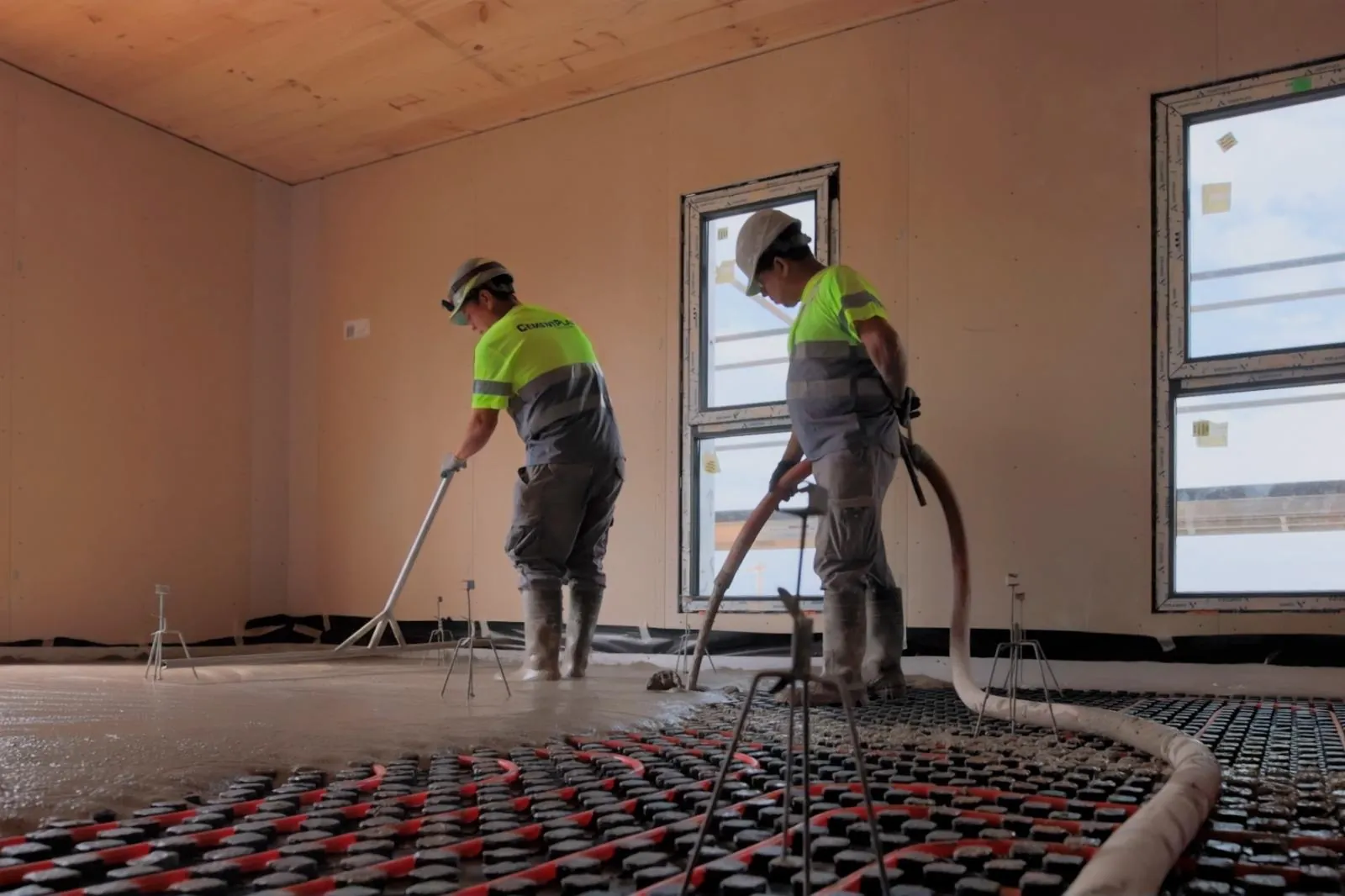
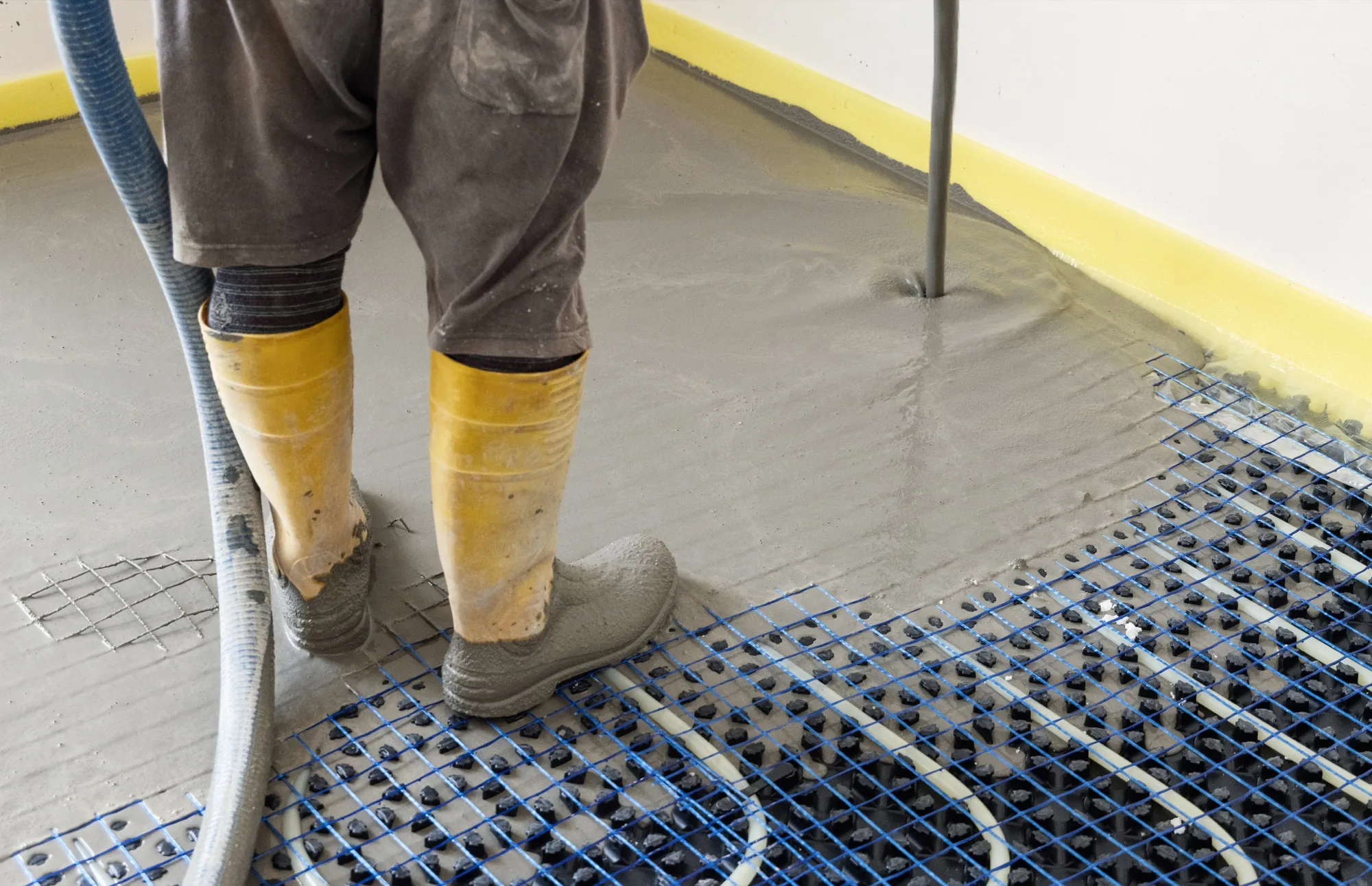
Real job site: mortar dosed with FloorGraphene is poured over the water pipes fixed on the studded panels. Scroll to watch the pour.
The water pipes are clipped onto the plastic studded trays over the slab, ready for the pour.
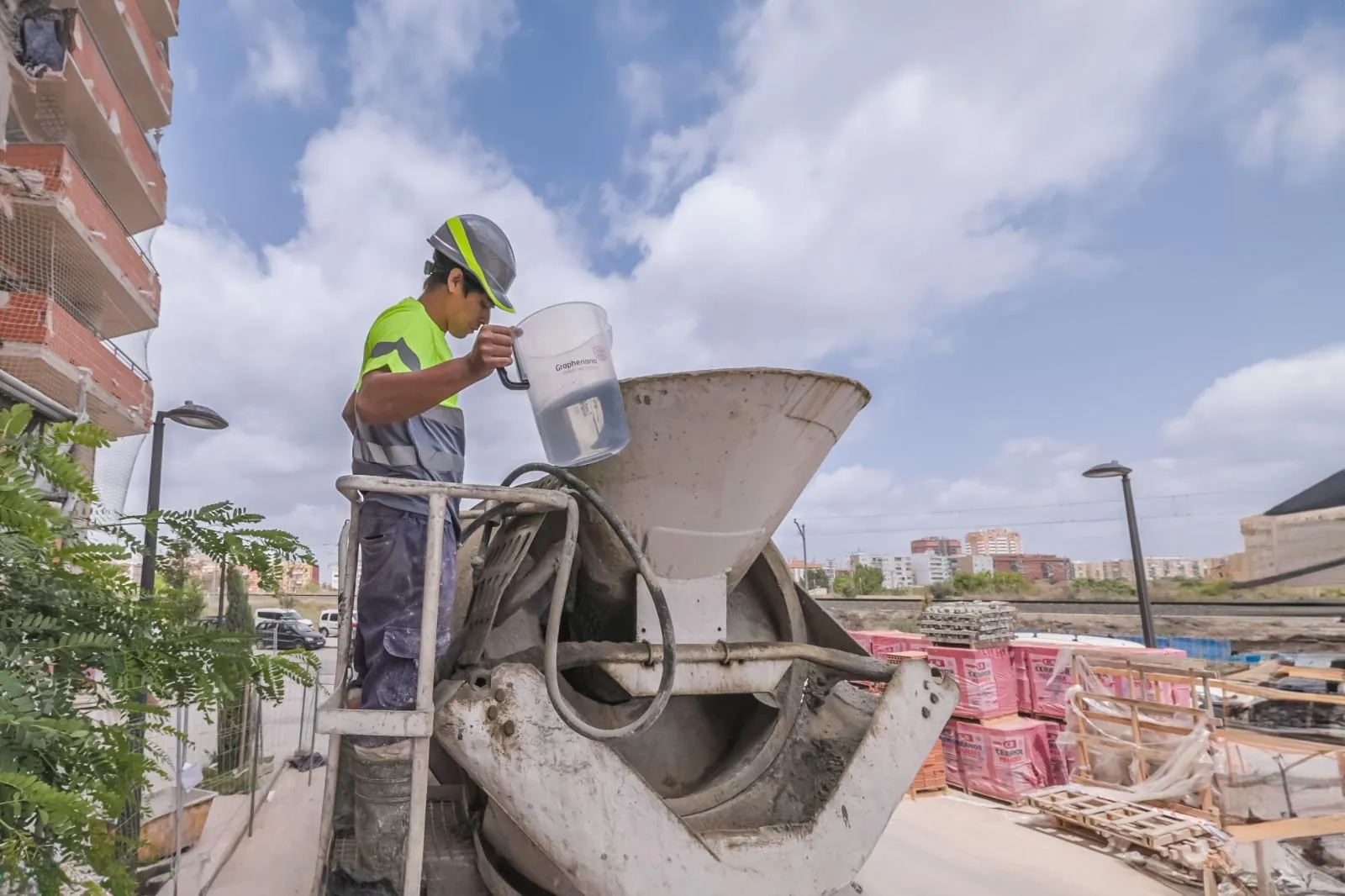
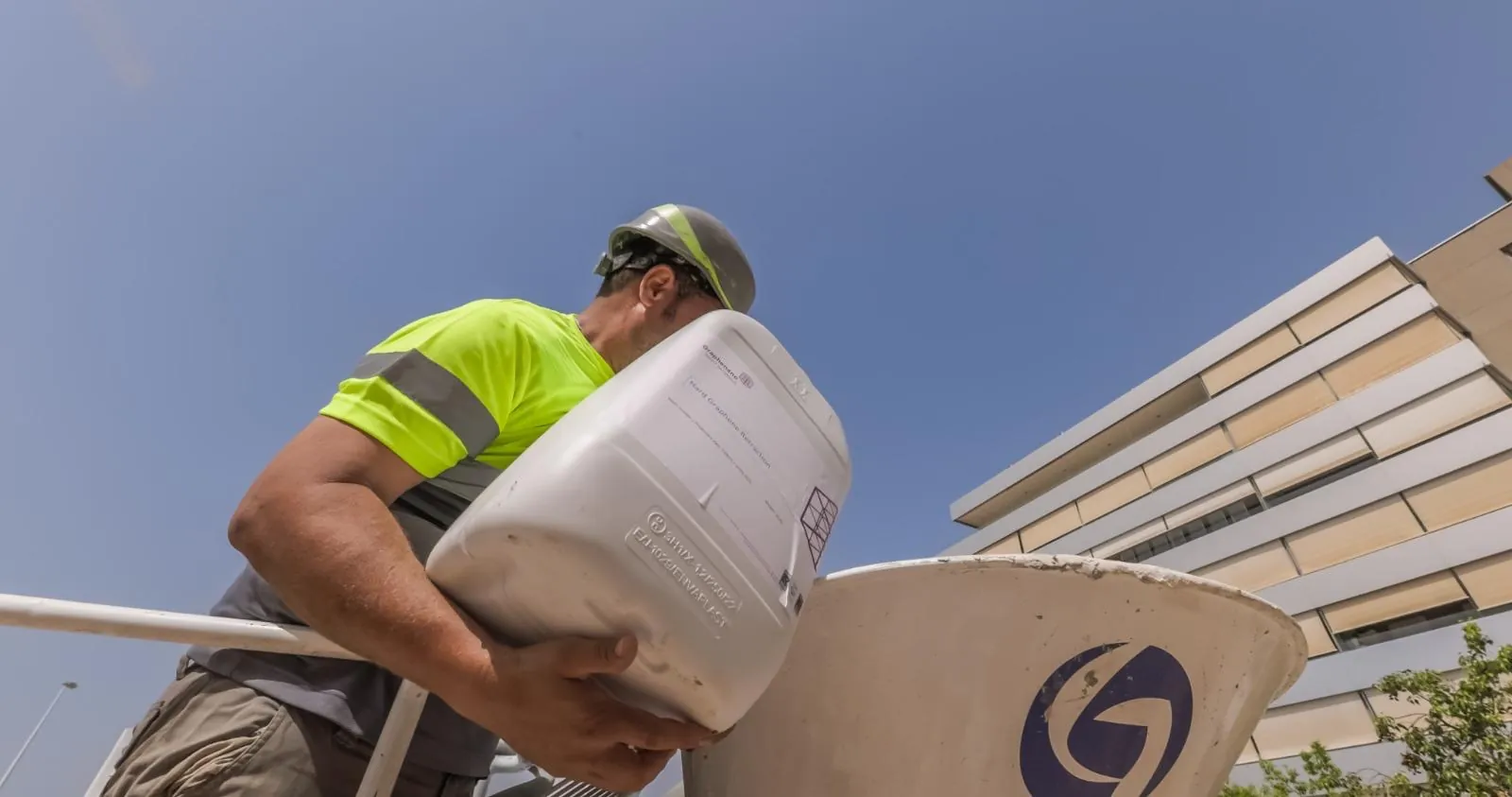
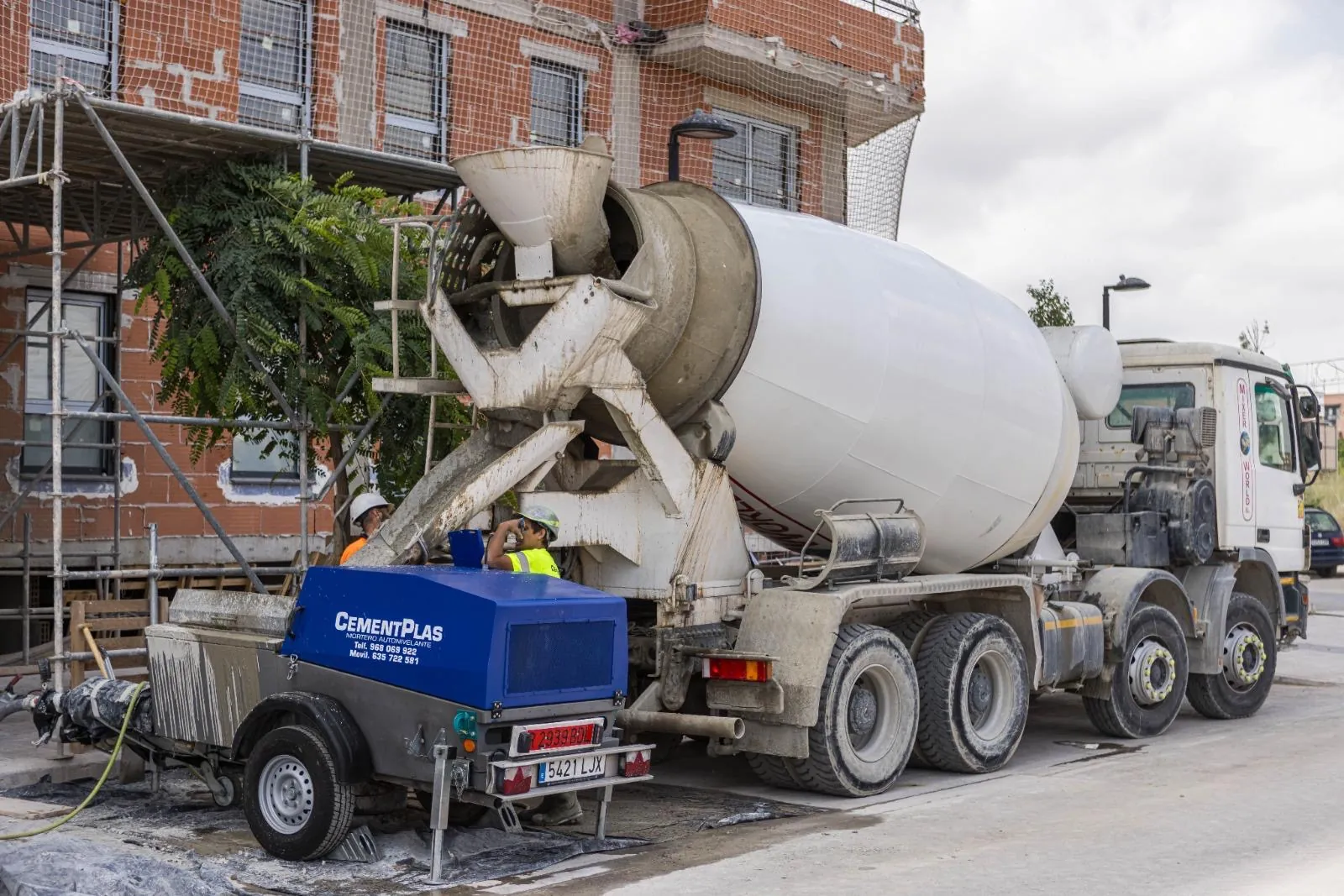
The self-levelling mortar with FloorGraphene (dosed into the truck mixer) covers pipes and panel in one pass.
Heat crosses the screed without resistance: fewer heat-pump hours and up to −30 % energy and CO₂.
The radiant floor that consumes less.
High-activity graphene-based additive that multiplies the thermal conductivity of concretes and self-levelling mortars for radiant floor heating. It reaches k = 1.5–2.0 W/m·K depending on the aggregate, versus 0.88 for cement mortar: heat arrives sooner, the system works less and consumption drops by up to 30 %. The alternative to anhydrite, dosed directly into the truck mixer.
Heat, from pipe to floor finish
FloorGrapheneQ = A · k · ΔT — for the same area and temperature difference, heat flow rises with k without touching the installation or screed thickness.
Estimate your home's saving
FloorGrapheneFloorGraphene calculator model: 85 W/m² corrected for climate, orientation and insulation; 6 heating months; heat pump COP 3; €0.205/kWh and 0.390 kg CO₂/kWh (2022 averages, Spain). Indicative estimate, not a project energy study.
annual energy consumption for heating (Madrid case, COP 3)
More than double conventional mortar (0.88) and above anhydrite (1.55) with siliceous aggregate.
1.5 kg per m³ of concrete, directly into the truck mixer. Homogenisation in 5–10 minutes.
Fewer heat-pump hours for the same comfort temperature: up to −30 % consumption and annual CO₂ emissions.
Raising K raises the floor's radiant capacity without touching the installation or the screed thickness.
Does not alter consistency or appearance of fresh concrete; improves compression, flexural strength and durability.
Lower placing and execution cost than anhydrite mortar, with better conductivity.
FloorGraphene
What is FloorGraphene?
A graphene-based thermal-conductivity additive for radiant-floor concrete and self-levelling screeds. It is not an electric heating system: it makes the screed conduct the heat from the pipes better.
What thermal conductivity does the screed reach?
k = 1.5 W/m·K with limestone aggregate and 2.0 W/m·K with siliceous aggregate, versus 0.88 for conventional cement screed and 1.55 for anhydrite screed.
How much heating energy is saved?
Up to 30 % of annual energy use in the Madrid case study with a heat pump (COP 3). The range documented in the comparative studies is 20 % to 40 % depending on the home.
How is it dosed?
At 1.5 kg per m³ of concrete, directly into the truck mixer. Shake the container before use and mix for 5 to 10 minutes to homogenise. Preliminary trials are recommended to set the optimum dosage for each application.
Does it change fresh concrete or placement?
It does not alter the consistency or appearance of fresh concrete, and it improves compressive and flexural strength and durability. It is placed with the same equipment.
Why FloorGraphene instead of anhydrite?
With siliceous aggregate it conducts more than anhydrite (2.0 vs 1.55 W/m·K) and has a lower placement and execution cost.