When a designer considers replacing steel with glass fibre bars, one of the first questions is whether GFRP rebar carries CE marking. The short answer is that it can, but by a different route from the usual one: the European Technical Assessment (ETA).
This guide explains each document on that route, the order in which they come, what they assess and what to check before you specify GFRP reinforcement.
Why GFRP rebar needs an ETA
In the European Union, CE marking of construction products rests on one of two routes:
- A harmonised standard, where a European standard exists for that type of product.
- A European Technical Assessment, where there is no harmonised standard or the product does not fit it.
Fibre reinforced polymer (FRP) bars for reinforcing concrete have no harmonised standard, so their only route to CE marking is the ETA. It is voluntary for the manufacturer, but without it the bar cannot be CE marked.
In Ireland and Northern Ireland, CE marking works exactly as in the rest of the EU. Great Britain has its own UKCA mark; for projects in England, Scotland and Wales, check the current government guidance on how CE-marked construction products are recognised.
The EAD: what is assessed
Before a product can be assessed, someone has to define how. That is the job of the EAD (European Assessment Document), drawn up by the technical assessment bodies through their European organisation, EOTA. For FRP bars the document is EAD 260023-00-0301, which covers carbon, glass, basalt and aramid fibre bars used as reinforcement in structural elements.
The EAD defines which characteristics are assessed and with which tests. They include:
| Characteristic | Why it matters |
|---|---|
| Characteristic tensile strength | The basis of ultimate limit state design |
| Modulus of elasticity | Governs deflection and cracking |
| Ultimate strain | Defines how far the bar can deform before it fails |
| Bond to concrete | For anchorage and crack control |
| Transverse shear strength | Dowel action and behaviour at joints |
| Resistance in an alkaline environment | Concrete is alkaline: the bar must retain its strength |
| Glass transition temperature | Thermal limit of the resin |
| Dimensions and effective area | So that the design area is the real one |
These are exactly the data a reputable manufacturer publishes in its data sheet, diameter by diameter. You can see ours on the GraphenBar data sheet.
The ETA: who issues it and how
The ETA is issued by a Technical Assessment Body (TAB) designated by a Member State. In outline, the process is:
- The manufacturer applies for an assessment of its product against an EAD.
- The TAB sets the test programme and the tests are carried out on the product.
- With the results, it drafts an ETA stating the product’s performance.
- The draft is reviewed by the other TABs through EOTA.
- The ETA is issued and published in EOTA’s public database.
It is a long process: more than a year can pass between application and issue. ETAs have already been issued under this EAD for GFRP bars from other European manufacturers, and they can be consulted in the EOTA database.
System 1+: the notified body
An ETA assesses the product, but on its own it does not guarantee that every bar leaving the factory matches the one that was tested. That is the role of the system of assessment and verification of constancy of performance (AVCP). FRP bars for structural use fall under the most demanding one, system 1+, in which a notified body:
- carries out an initial inspection of the factory and its factory production control;
- continuously surveys that production control;
- selects bars itself, at the factory or at the manufacturer’s storage facilities, and tests them.
If everything conforms, it issues the certificate of constancy of performance.
From ETA to CE marking, step by step
| Step | Document | Issued by |
|---|---|---|
| 1 | EAD 260023-00-0301: how FRP bars are assessed | EOTA |
| 2 | ETA: performance of the specific product | Technical Assessment Body |
| 3 | Certificate of constancy of performance | Notified body (system 1+) |
| 4 | Declaration of performance (DoP) | Manufacturer |
| 5 | CE marking on the product or its label | Manufacturer |
An issued ETA does not yet mean a CE-marked product: steps 3, 4 and 5 are still missing.
What to check as a specifier
- The ETA number and the EAD, and that the ETA appears in the EOTA database.
- The notified body’s certificate, with its identification number.
- The declaration of performance: actual values by diameter, not a generic ‘complies’.
- The CE label on the product or its packaging, consistent with the DoP.
- That the intended use in the ETA matches your project.
Until a product is CE marked, it can still be used like any solution that the codes do not explicitly cover: the engineer justifies it with tests, data sheets and the manufacturer’s documentation, and site supervision and building control accept it. For design, the current Eurocode 2 (EN 1992-1-1) does not yet include FRP reinforcement, so engineers turn to guidance such as ACI CODE-440.11-22 or Annex R of the new EN 1992-1-1, which we review in GFRP rebar vs steel.
Where GraphenBar stands
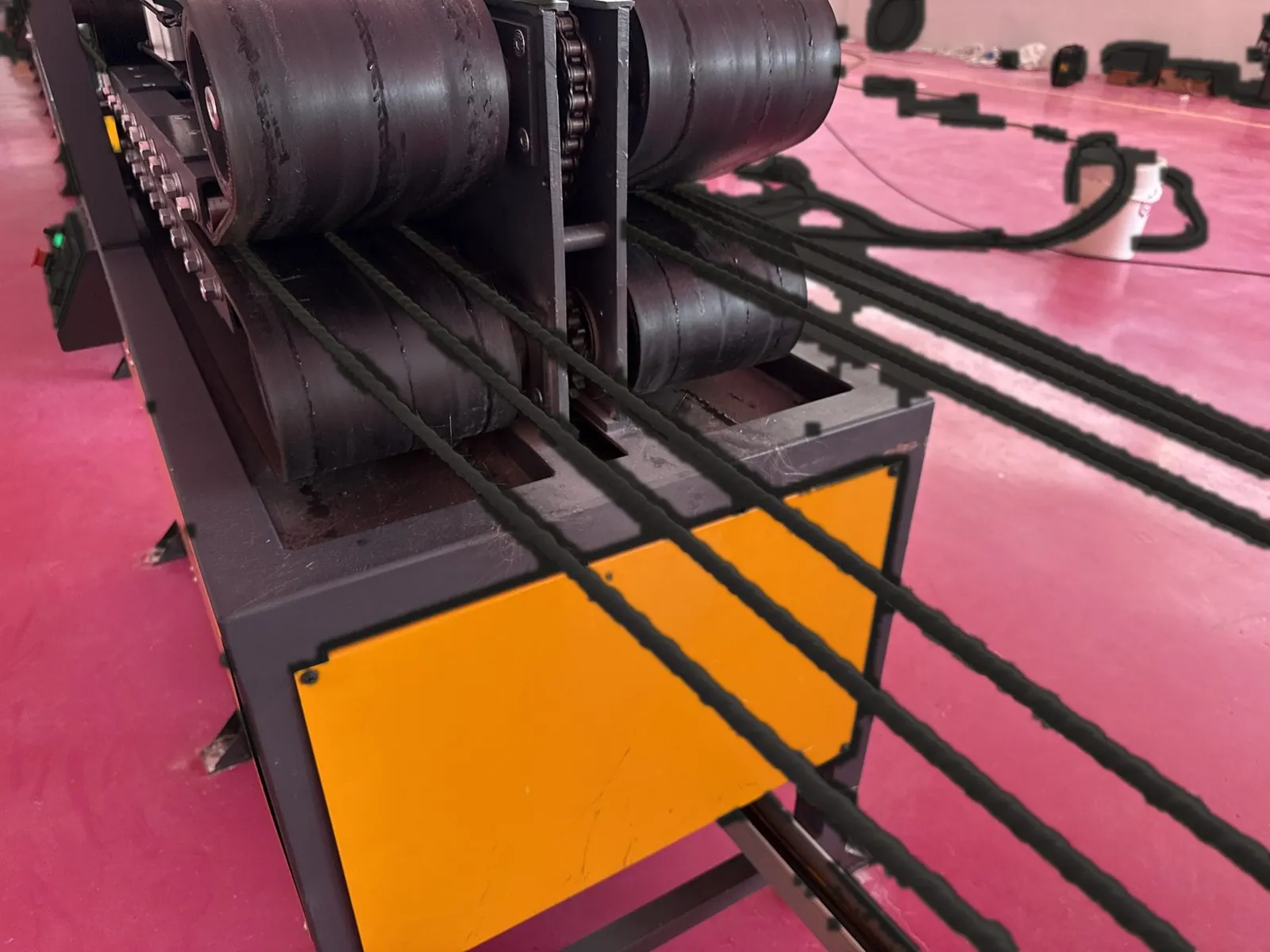
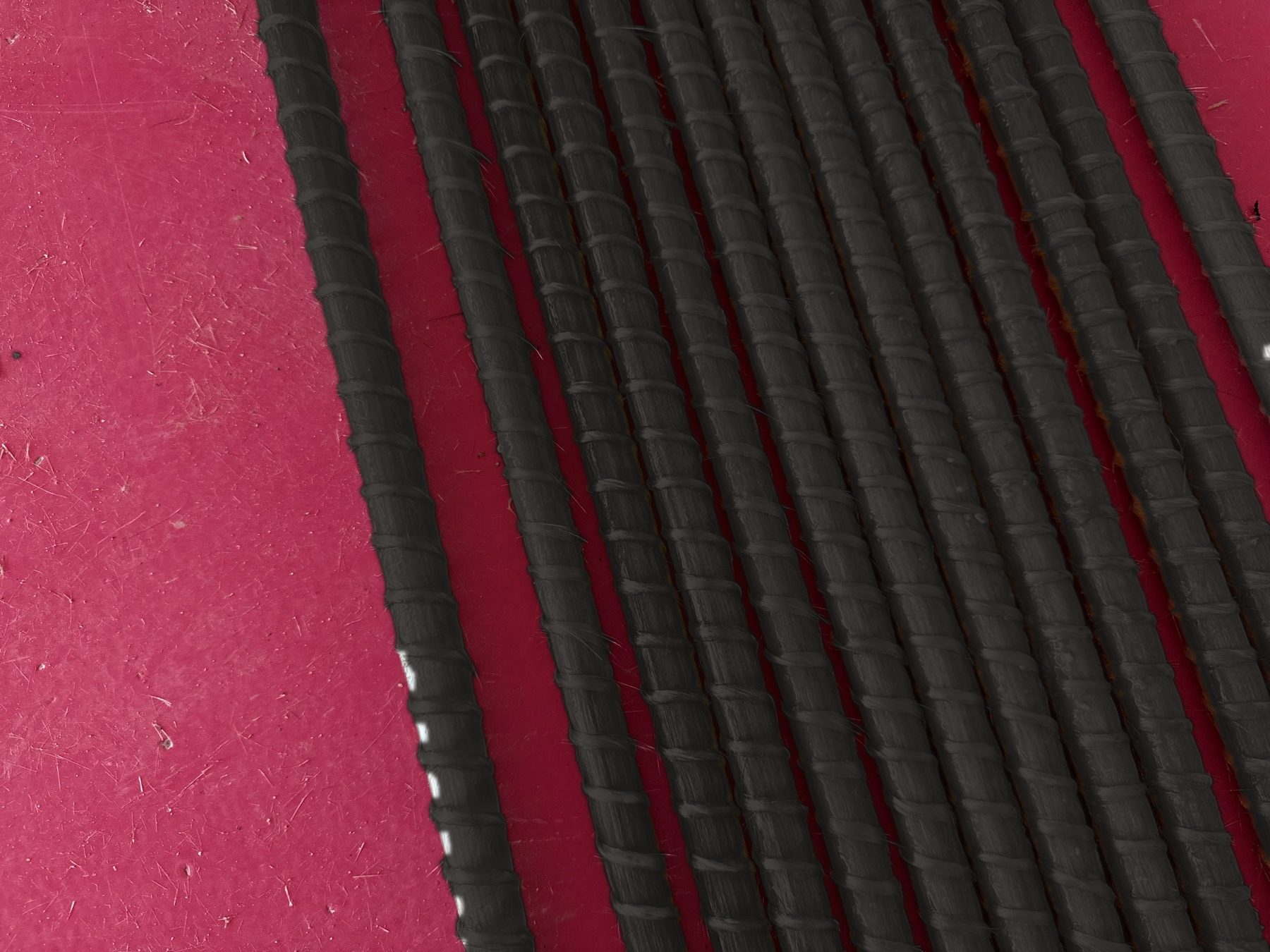
GraphenBar values are declared to EAD 260023-00-0301 and the bar is manufactured under factory production control, with batch control, on our pultrusion line in Yecla. Its European Technical Assessment is in progress; until it is issued, no performance is declared under the Construction Products Regulation.
Graphenano Smart Materials also holds certified quality, environmental and occupational health and safety management systems (ISO 9001, 14001 and 45001). These are company certificates, not product certificates.